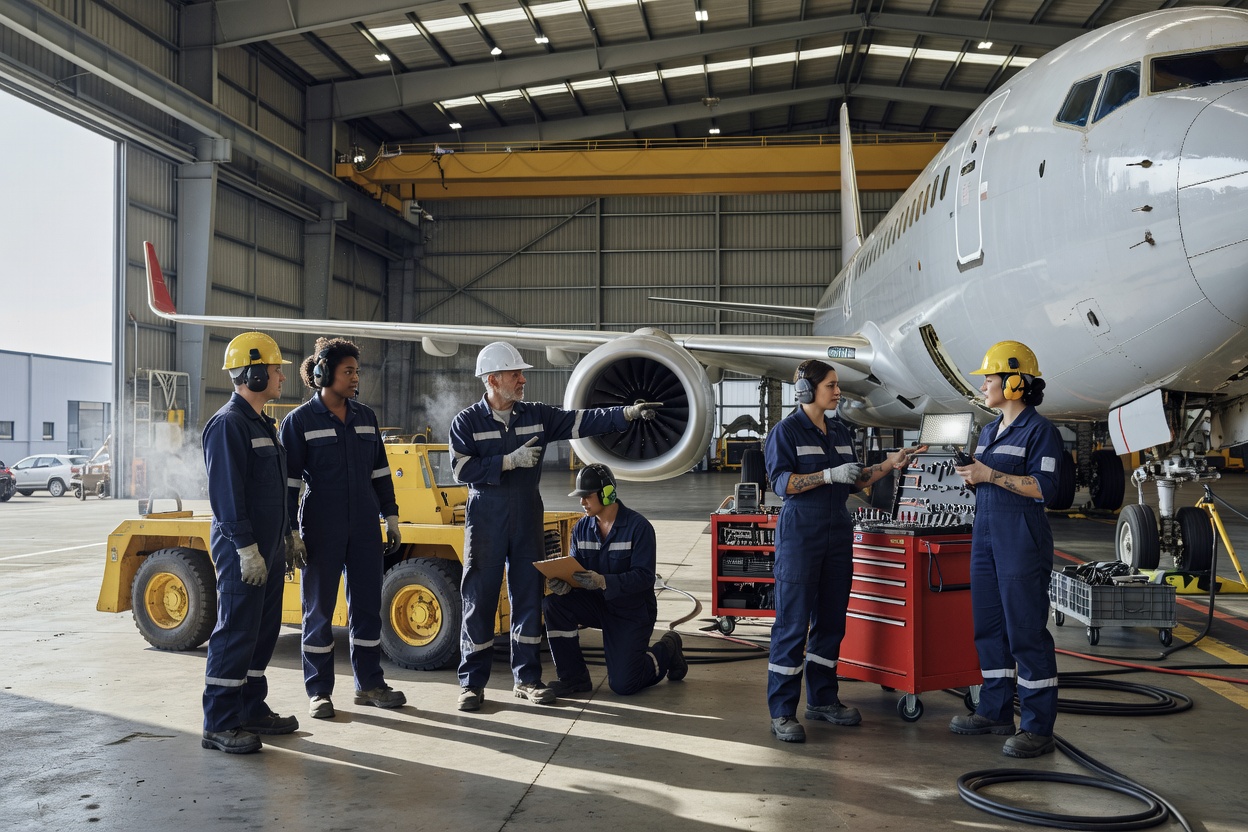
Coordination starts with a shared picture
A maintenance hangar changes continuously. Work packages develop, equipment arrives, access needs shift and aircraft positions become available or unavailable. A plan written at the beginning of a shift can be out of date before the first move. Coordinating well means keeping the operational picture current enough for decisions, while making clear who can authorize a movement and who must be informed.
The shared picture does not require a complicated software platform. It requires reliable status: aircraft location and state, current work, planned movements, route restrictions, equipment readiness and relevant hazards. Teams need to know where authoritative information lives and how a change is communicated. Duplicate boards or unowned spreadsheets can create the appearance of information without a trustworthy source.
Make roles explicit
Define who requests a move, who checks the work state, who authorizes it, who supervises it and who accepts the resulting position. These roles may vary by organization and activity, but ambiguity should not. A robot operator is not automatically the movement authority, and a maintenance planner is not necessarily responsible for real-time clearance. Procedures should make their relationship clear.
Briefings should cover the intended move, route, destination, vehicle or robotic mode, assigned supervisor, stop signal and conditions that require a pause. Include neighboring teams whose work could be affected. A concise read-back can expose a mismatch before movement begins. A change in aircraft status, route, personnel or equipment should prompt a fresh check rather than an assumption that the original briefing still applies.
Use a deliberate handoff sequence
Before a move, the requesting team confirms that the aircraft is in the required condition and that the planned work permits movement. The movement lead checks the route and surrounding activity, verifies equipment readiness and confirms that the destination is available. The responsible person gives authorization under the applicable procedure. The team then communicates the start and maintains a clear way to stop.
During movement, attention should stay on the controlled area and its changing conditions. People must know where to stand, how to remain outside restricted zones and what to do if they see an obstruction or an unexpected response. An automated system can report status, but the team still needs an agreed communication method that works if a display, network or sensor becomes unavailable.
After movement, confirm that the aircraft is positioned and secured as required, the movement device is clear, the destination team has accepted the handoff and the status record is updated. The next task should not begin on the basis of an assumed completion. A positive handover closes the loop between movement and maintenance.
Design for interruption and recovery
Interruptions are normal events to plan for, not rare exceptions to ignore. A technician may discover a concern, equipment may fail, a route may become blocked or a communication link may be lost. Establish stop conditions and recovery actions before the operation begins. The safe response might be to hold position, secure the aircraft, clear personnel or use a designated manual method; the appropriate action depends on the approved procedure and equipment design.
Recovery plans should be accessible and rehearsed. Identify who takes control, how the area is protected, what condition must be checked before restarting and how the event is documented. Avoid creating a second hazard by improvising a tow, pushing equipment by hand or bypassing an interlock without authorization. If a system has a degraded mode, ensure the people expected to use it understand the limits.
Coordinate the floor, not only the device
Movement coordination includes logistics and inspection schedules. A robot waiting for a route may block a delivery; a maintenance stand left in place can close a path; a late parts arrival can change the time at which an aircraft needs to move. Planners should assess conflicts across the whole bay and make dependencies visible. Where possible, reserve time and space for moves rather than assuming a route will be available on demand.
Use short, practical coordination conversations to resolve constraints early. Include supervisors, maintenance planners, technicians, stores and movement personnel where their work intersects. An escalation route helps when two tasks compete for the same space. A priority decision should identify the operational impact and who owns the decision, rather than leaving teams to negotiate while a move is waiting.
Learn from the handoffs
Review delays, stops, route changes, near misses and mismatched status records. The purpose is to find conditions that can be improved: unclear authority, inadequate staging, inaccurate floor information or an interface that hides a critical warning. Include workers who experienced the event and distinguish a system weakness from an individual’s reasonable response to it.
Measure quality by whether the operation is understood and controlled, not by whether it appears autonomous. A repeatable process can make a shift more predictable, but people remain responsible for working within applicable rules and procedures. The strongest handoff is specific, acknowledged and updated when conditions change.